Cold Pressed vs Refined Oil: A Simple Guide for Your Kitchen
NOONI Team · 12 November 2026
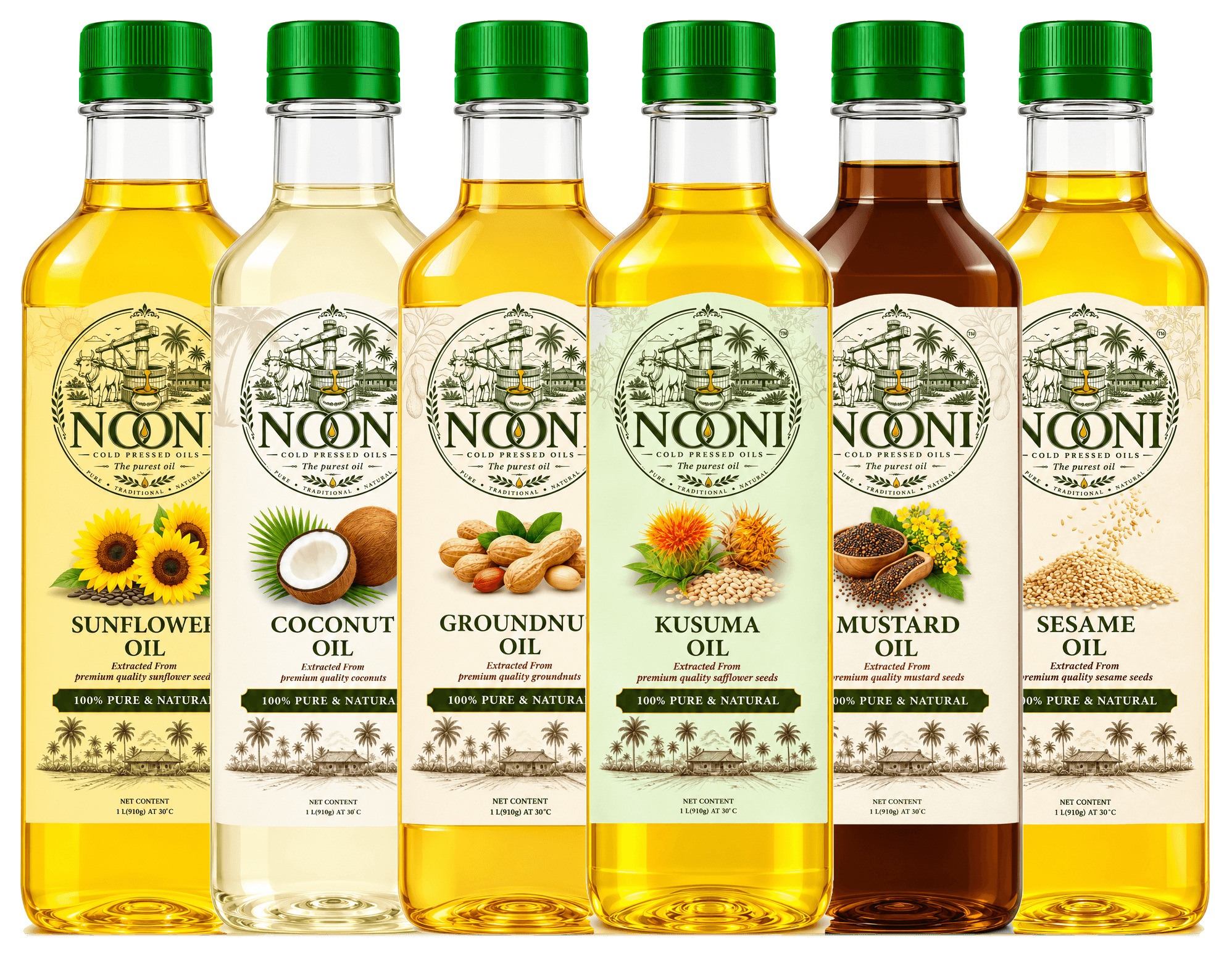
Walk down any oil aisle and the labels start to blur: refined, cold pressed, wood pressed, filtered. This short guide explains what those words mean so you can pick the right oil for your kitchen.
How oil is made
Every oil starts as seeds or nuts that are pressed to release the oil. What happens next is what separates one bottle from another.
- Refined oil is pressed at high speed, then treated with heat and processing steps to give a neutral colour, smell and taste.
- Cold pressed oil is pressed slowly at low temperature and only filtered, so more of the seed's natural aroma and flavour stays in the bottle.
What you will notice in the kitchen
Cold pressed groundnut, sesame and coconut oils smell and taste like the seed they came from. That is not a flaw. It is why traditional recipes work so well with them: a tempering of mustard seeds in groundnut oil, or a South Indian curry finished with coconut oil.
Choosing the right oil for the dish
- Everyday sautéing and deep frying: groundnut oil is a favourite because it holds up well to high heat.
- Tempering and chutneys: sesame oil adds a deep, nutty note.
- Coconut-forward dishes: coconut oil suits curries, stir fries and sweets.
Storing your oil
Keep the bottle tightly closed, away from the stove and direct sunlight. A cool cupboard is ideal. Cold pressed oils can show a little natural sediment at the bottom, which is normal.
The short version
If you want an oil that tastes of the seed it came from, look for cold pressed. If you want a neutral taste for every dish, refined is the usual choice. Many kitchens keep one of each.
Have a question about which NOONI oil suits your cooking? Browse our oils and find your match.